Dadasaheb Phalke
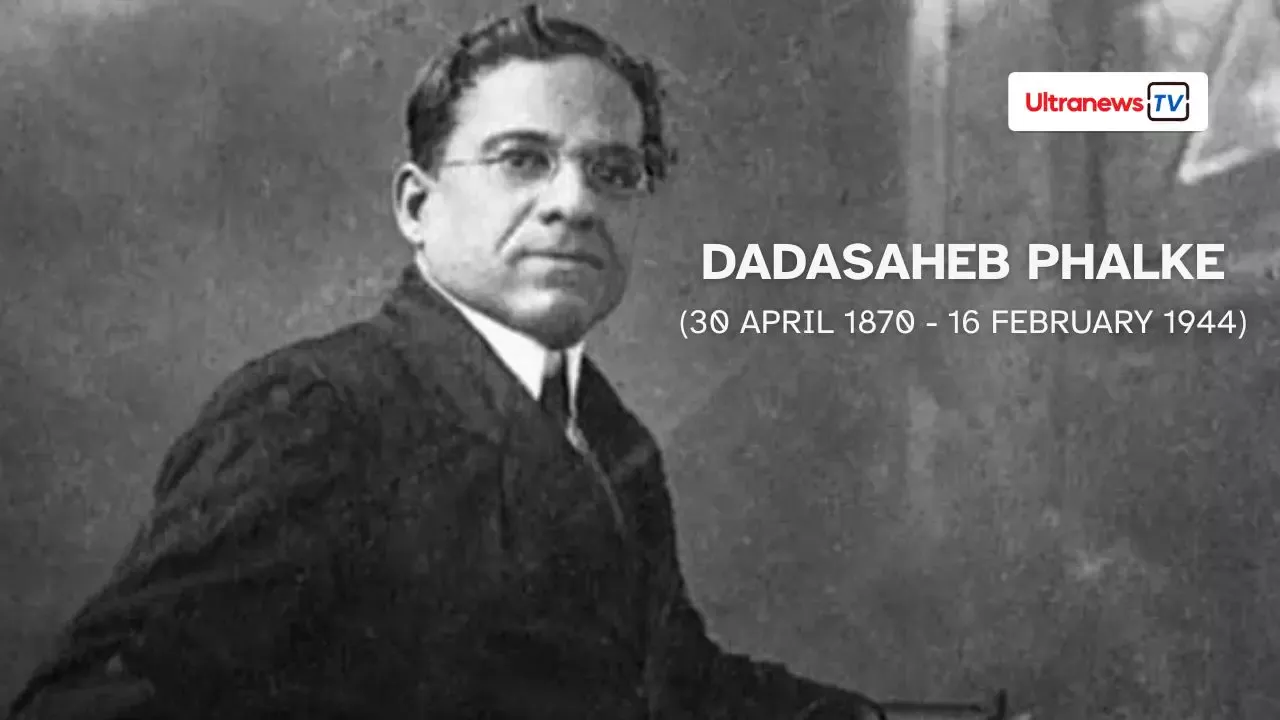
Dadasaheb Phalke is known as the Father of Indian Cinema and remembered for his contributions to filmmaking. To honour him, the Government of India instituted the Dadasaheb Phalke Award (1969), which is considered the highest award in Indian cinema.
Dadasaheb Phalke Biography
|
Name |
Dhundiraj Govind Phalke |
|---|---|
|
Date of Birth |
30 April 1870 |
|
Place of Birth |
Trimbak, near Nashik, Maharashtra, India |
|
Date of Death |
16 February 1944 |
|
Place of Death |
Nashik, Bombay Presidency, British India |
|
Father |
Govind Sadashiv Phalke |
|
Mother |
Dwarkabai Phalke |
|
Siblings |
Unknown |
|
Spouse |
|
|
Children |
Bhalchandra Phalke, Mahadev Phalke, Nilkanth Phalke, Mandakini Phalke, Saraswati Phalke, Vasundhara Phalke, Vrinda Phalke |
|
Occupation |
Director, producer, screenwriter, editor, art director, costume designer, make-up artist |
|
Also Known as |
Father of Indian Cinema |
Early Life and Education
Dhundiraj Govind Phalke was born on 30 April 1870 in Trimbak, near Nashik, Maharashtra, India, to Govind Sadashiv Phalke and Dwarkabai Phalke. He belonged to a Marathi-speaking Chitpavan Brahmin family. He had many siblings, some of whom worked as a Dewan and a priest.
Phalke completed his primary education at Trimbakeshwar and did his matriculation in Bombay. He went to Sir J.J. School of Art, Bombay, in 1885 and did a one-year course in drawing. He later joined Kala Bhavan, the Faculty of Fine Arts, at the Maharaja Sayajirao University of Baroda and completed a course in Oil Painting and Watercolour painting in 1890.
He bought a film camera and did experiments with it. He won a gold medal for creating a model of an ideal theatre at the Industrial Exhibition of Ahmedabad. Phalke did a six-months course to learn the techniques of three-colour ceramic photography.
Career
In 1910, Phalke watched the silent film The Life of Christ, he was inspired and imagined Indian gods and epics to be depicted in a similar way. He learned filmmaking techniques, camera handling, film processing, and special effects on his own. He travelled and studied things that could support film production.
In 1913, he released Raja Harishchandra, which became the most iconic film and the first full-length Indian feature film. Phalke was the writer, director, editor, designer and producer. The film kick-started his film career.
He made several mythological films, such as Mohini Bhasmasur (1913), Satyavan Savitri (1914), Lanka Dahan (1917), Shri Krishna Janma (1918), and Kaliya Mardan (1919), which became hits. In 1918, he founded Hindustan Film Company, which aimed to make big-budget films, and it trained actors, filmmakers, and technicians.
He introduced special effects, makeup styles, set creation techniques and more things that paved the way for future artists. With time, films were made for commercial success, and his dominance gradually declined. He made Setu Bandhan (1932), which was released with sound dubbing. In 1937, he directed Gangavataran, his first and only film where actors talked. After this, the filmmaker retired due to his old age and died in Nashik on 16 February 1944.
He did not receive any award in his lifetime, as filmmaking was in its infancy. The Government of India introduced the Dadasaheb Phalke Award to honour the artists.
 Follow the channel.


Personality
Latest English News

EMI Calculator
Facebook Fanpage